Clarvos
Business ambition. A clear way forward.
Product design lead · Discovery to launch · 2024 – 2026Inside the product
Ambition, made actionable
Small businesses have big ambitions. They shouldn’t need an entire marketing team to act on them. I designed the product that connects their business, their creative work and their next growth decision.
Product strategy, UX and the complete extension of the brand identity into the product UI language.
Impact
Reduction in campaign setup time
More creative variants tested per cycle
From rebrand to public launch on April 7, 2026
The business stays
at the center.
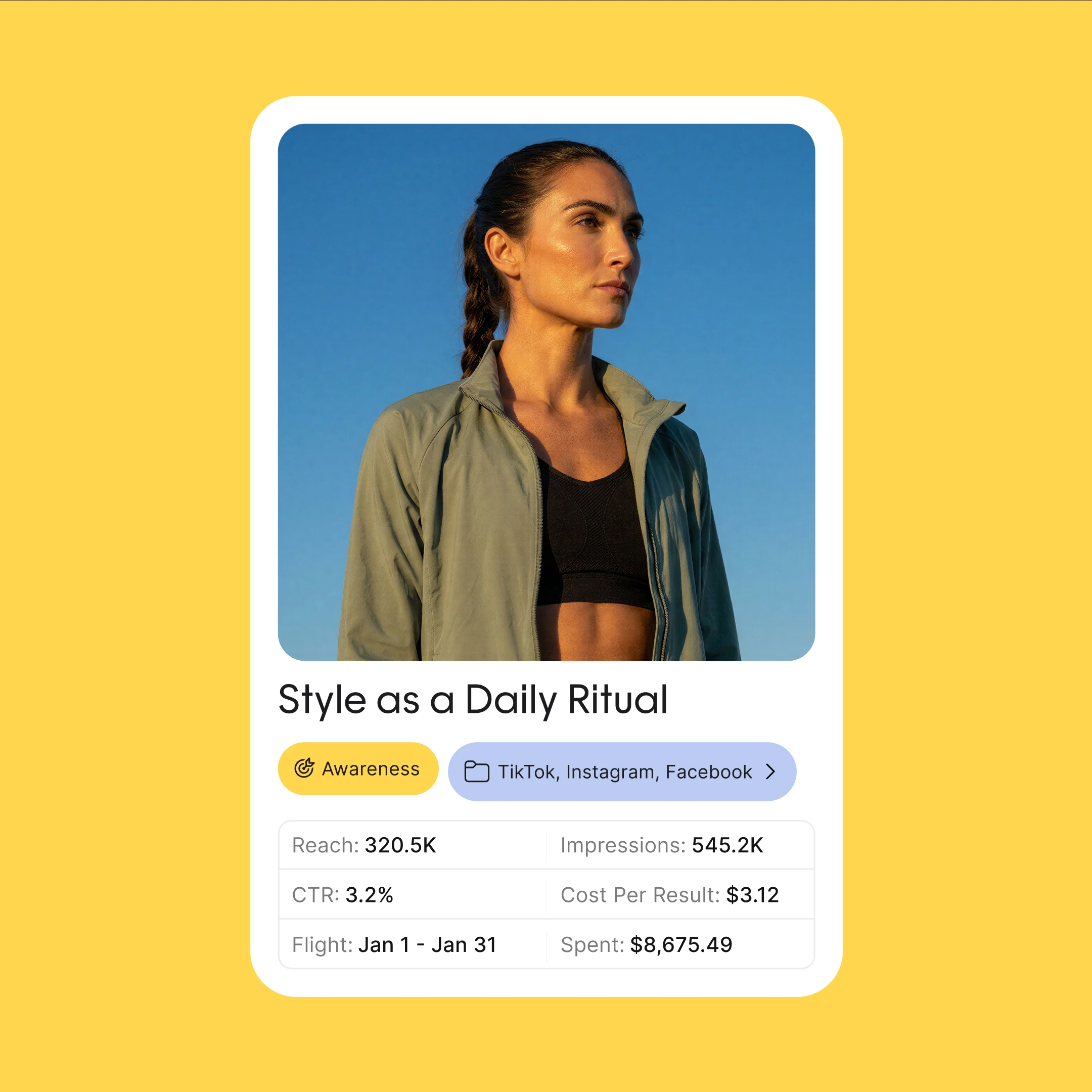
Signals, audiences and campaign decisions. One connected view.

Brand identity and motion compositions with Brightscout ↗ Product design and UI language by me.
From research to scale
- Research
Start with the business owner
Interviews and moderated sessions with owners and marketers. They didn’t ask how it works. They asked how to sign up.
- Design
Agents do the setup
Business context in, publisher-ready campaigns out, with every choice visible and editable.
- Validate
Product–market fit
Working prototypes in front of customers until the value was unmistakable.
- Beta
Learning with early access partners
Daily use exposed what was missing: organic posting, a conversational workspace and trending topics.
- Launch
Out of beta
Public launch on April 7, 2026, covered by BusinessWire, SiliconANGLE and MarTech Series.
- Scale
Onward
Customer feedback keeps reshaping the product, starting with a faster path to a first campaign.
Discovery by prototype
We built the airplane while flying it. Each prototype told us what to build next.
Two ways to launch
Agentic when you want help. Manual when you know exactly what you want.
Most owners want the agent to do the setup. Some have run Facebook’s Ads Manager for years and want to do their own thing. Clarvos supports both, on the same campaign model.
Manual mode is the setup flow customers use today. Agentic mode is my design for the conversation that does it for them.
Agentic mode
A business goal becomes a publisher-ready campaign, in conversation.
Describe the goal and the agent proposes the objective, optimization, conversion tracking, placements and budget, each set the way the publisher expects it and each one visible beside the conversation. The tour plays on its own; open it to try it yourself.


Manual mode
For people who know Ads Manager, the same campaign set by hand.
Manual setup keeps its guardrails. Save with the Pixel ID empty and the form names the missing conversion-tracking requirement where it can be repaired. Switch to Awareness and the irrelevant requirements fall away.
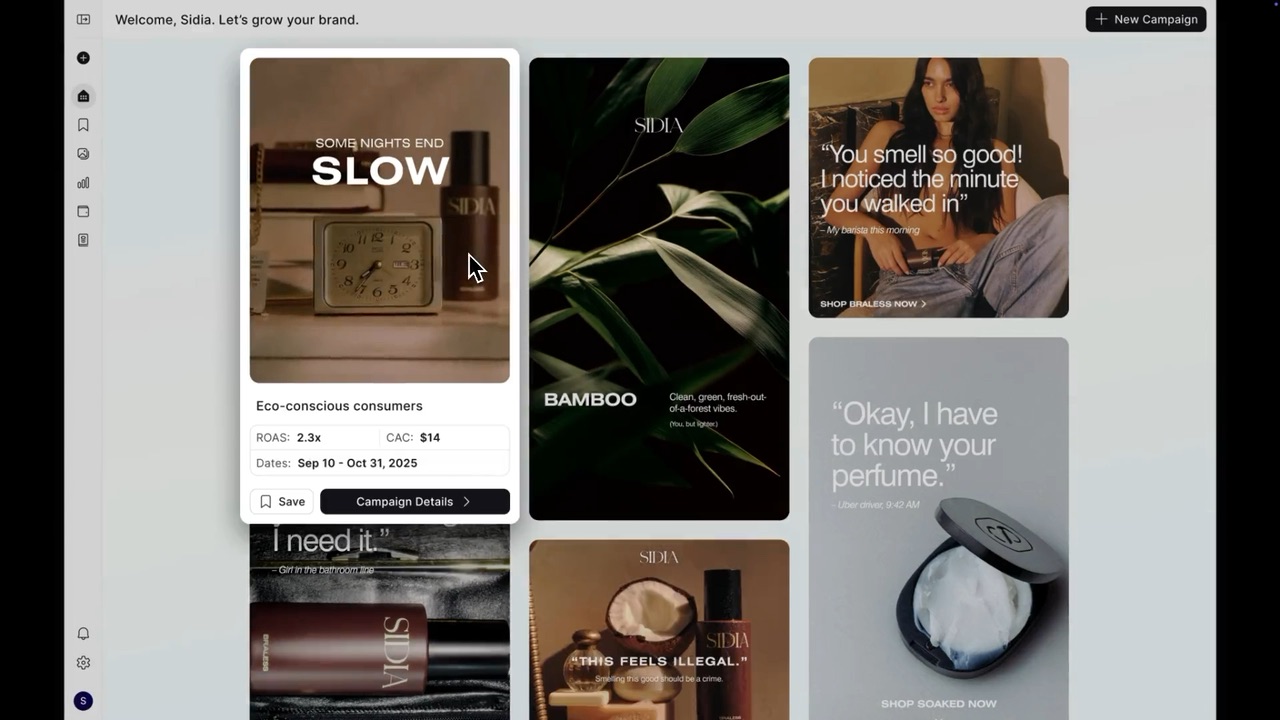
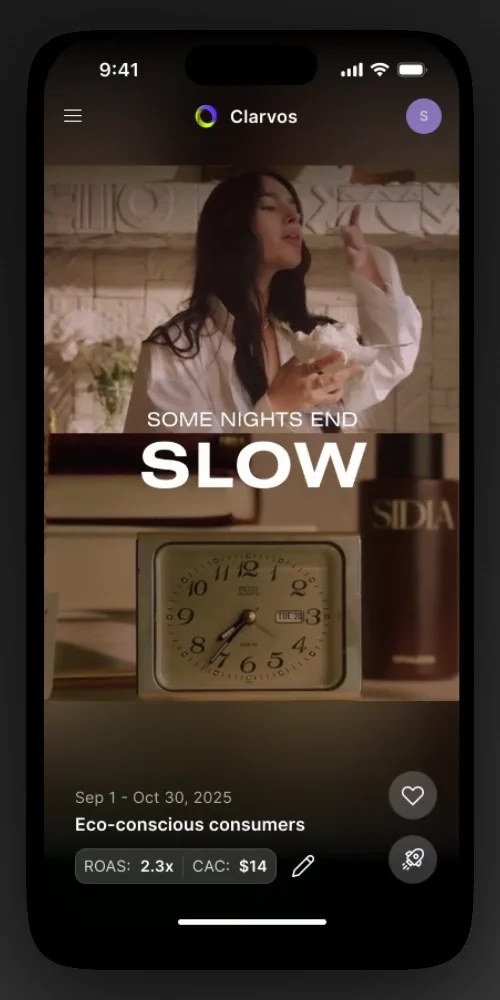
Creative that starts with what’s already working, in the feed and on the phone. Recorded in the product.
Designing trust
A system that makes decisions for you.
The hardest problem in agentic AI isn’t the interface. It’s calibrating how much autonomy the system should take, and how to communicate its reasoning.
Every asset surfaces a hybrid quality score that combines AI analysis with human judgment.
The campaign loop
Set up context. Then the agents keep improving it.
Agentic or manual, setup ends in a publisher-ready campaign. From there the agents make creative from the business’s context, score it before it runs, watch performance, move budget to what’s working and carry what they learn into the next round.
- Campaign setupagentic or manual
- Generate creative
- Judge before it runsscore, then improve ↑
- Launch
- Monitor performance
- Rebalance and optimize
- Continual learninground again → Generate creative
Two ways in, one campaign model.
Most owners want the agent to do the setup. Some have run Ads Manager for years and want to do their own thing.
Score it before it runs.
Every asset surfaces a hybrid quality score that combines AI analysis with human judgment.
An explanation one click away.
Even owners who say “just handle everything” trust it more when they can see why.
Optimize creative
The agents score a creative, then improve it.
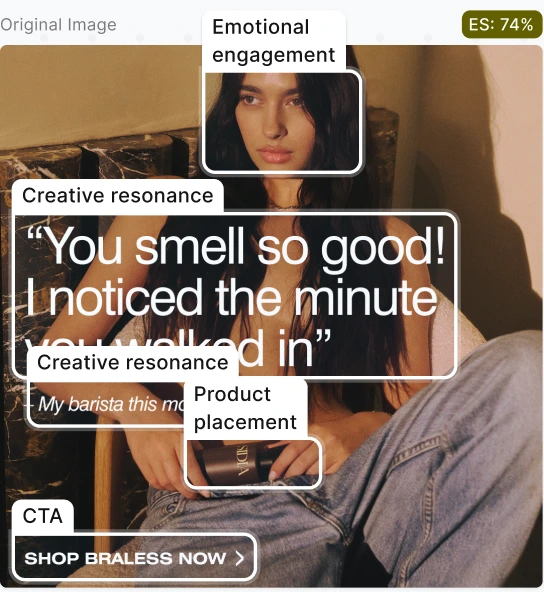
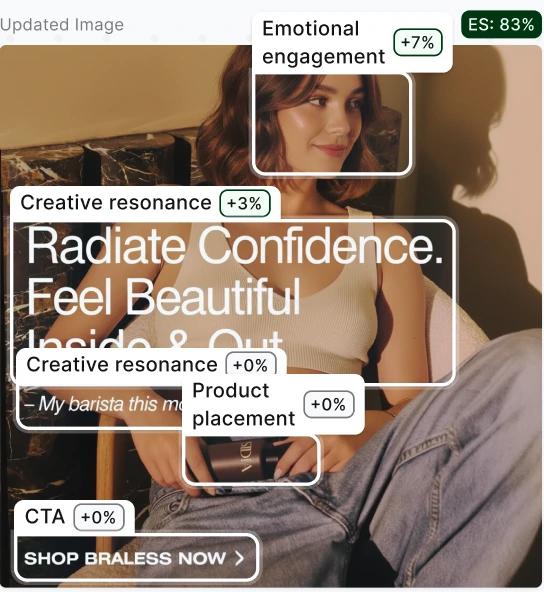
Emotional engagement score before and after the agents’ edit.
Discovered in beta
Early access partners showed us what to build next. They posted organically before they ever paid, they wanted to talk to the product, and they wanted to know what was trending.
Trending topics
What’s moving in your category, and why it matters to you.
Organic, then paid
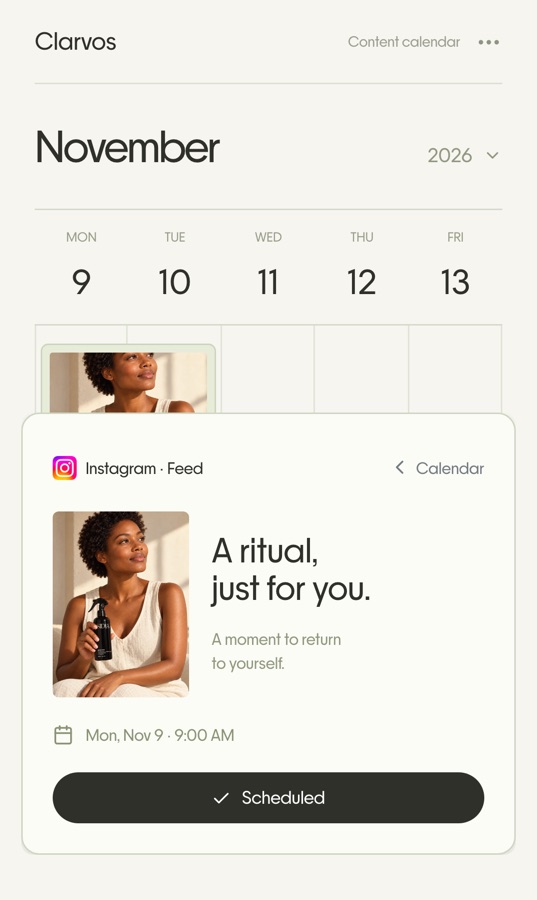
A month of content. A new source of learning.
Move from month to week to the post. Refine a scheduled caption, inspect a published winner, then carry its creative and evidence into a new paid campaign.
Performance
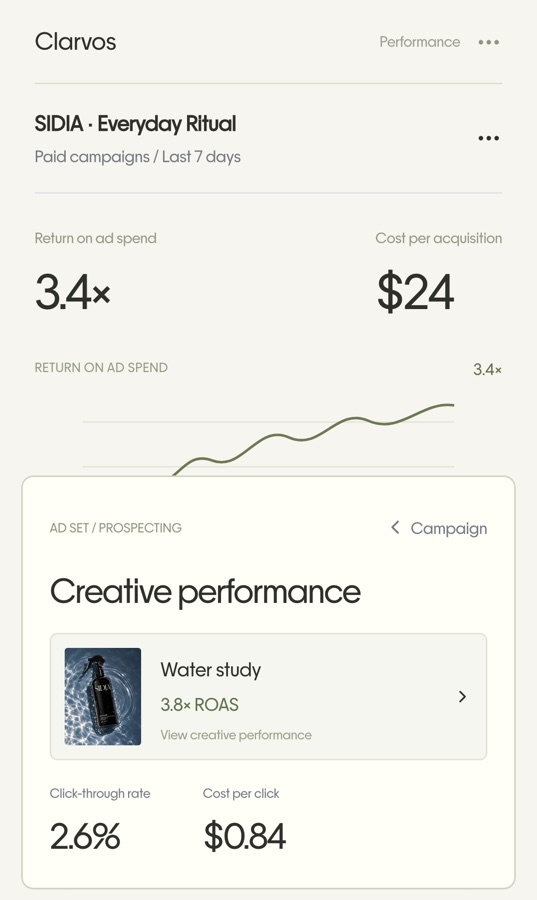
A trend and a quantity answer different questions.
Compare movement with magnitude, choose the measures that matter, then drill into each publisher’s ad groups.
What we tested
Moderated research at the retreat, then again before v3.
- 01
“How do I sign up?”
Participants didn’t ask how it works. They asked how to sign up.
- 02
Manual alongside agentic
Marketers with existing assets wanted manual flows too, so every tool also works on its own.
- 03
An explanation one click away
Even users who say “just handle everything” trust it more when they can see why.
Credits
- Role
- Product design lead
- Work
- Discovery, interaction design, prototyping, product UI language, design system
- Worked with
- The CEO, CTO and CPO, product managers, engineering, AI/ML, brand and go-to-market
- Brand identity
- Brightscout
- Brands
- Dunkin’, purely elizabeth, PCG
- Launch coverage
- BusinessWire, SiliconANGLE, MarTech Series